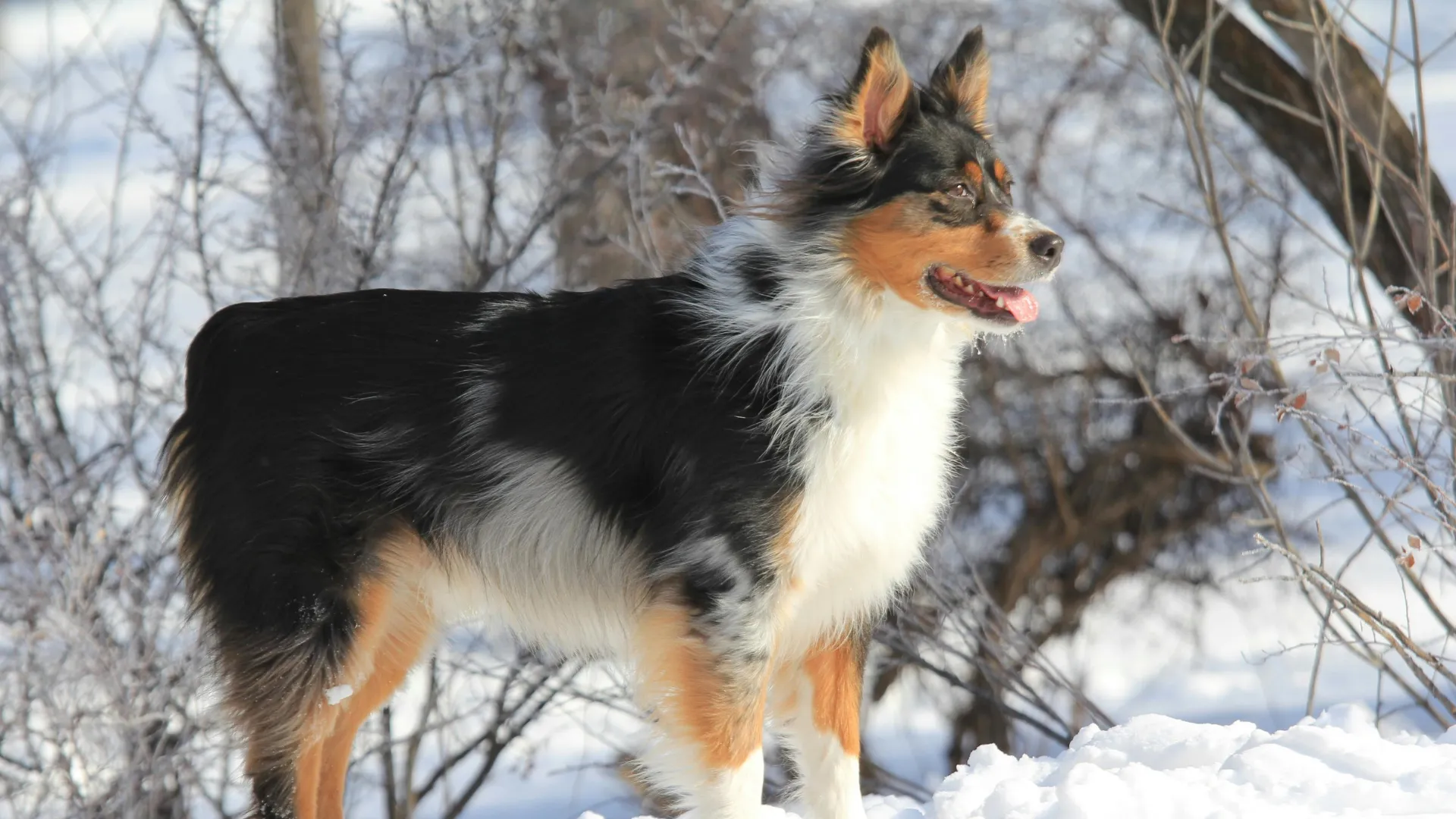
Australian Shepherd shedding peaks during coat blows in spring and fall. To control the hair and odor, use an undercoat rake every other day. Never shave an Aussie, as their double coat regulates temperature. Shaving can cause permanent coat damage and increase the risk of heatstroke.
Contents
- 1 Understanding the Australian Shepherd Double Coat
- 2 The Shedding Cycle: What to Expect
- 3 Why Australian Shepherds Develop Odor
- 4 Essential Grooming Tools for Australian Shepherds
- 5 The Complete Brushing Routine
- 6 Bathing Your Australian Shepherd
- 7 Quick Odor Control Methods
- 8 Why You Should Never Shave an Australian Shepherd
- 9 Additional Hygiene Maintenance
- 10 Diet’s Impact on Coat and Odor
- 11 Warning Signs: When to See a Vet
- 12 Grooming as Bonding Time
- 13 Professional Grooming vs. DIY
- 14 Seasonal Grooming Adjustments
- 15 Final Thoughts on Australian Shepherd Grooming
2026 Update on Double Coat Care
New grooming research confirms that Australian Shepherds with intact double coats stay cooler in summer than shaved dogs. Their guard hairs and undercoat work together to create an insulating air layer that protects against both heat and cold. Professional groomers now universally recommend against shaving double-coated breeds.
Understanding the Australian Shepherd Double Coat
Australian Shepherds have what is called a double coat. This means they have two layers of fur that work together to protect them from weather, dirt, and temperature changes.
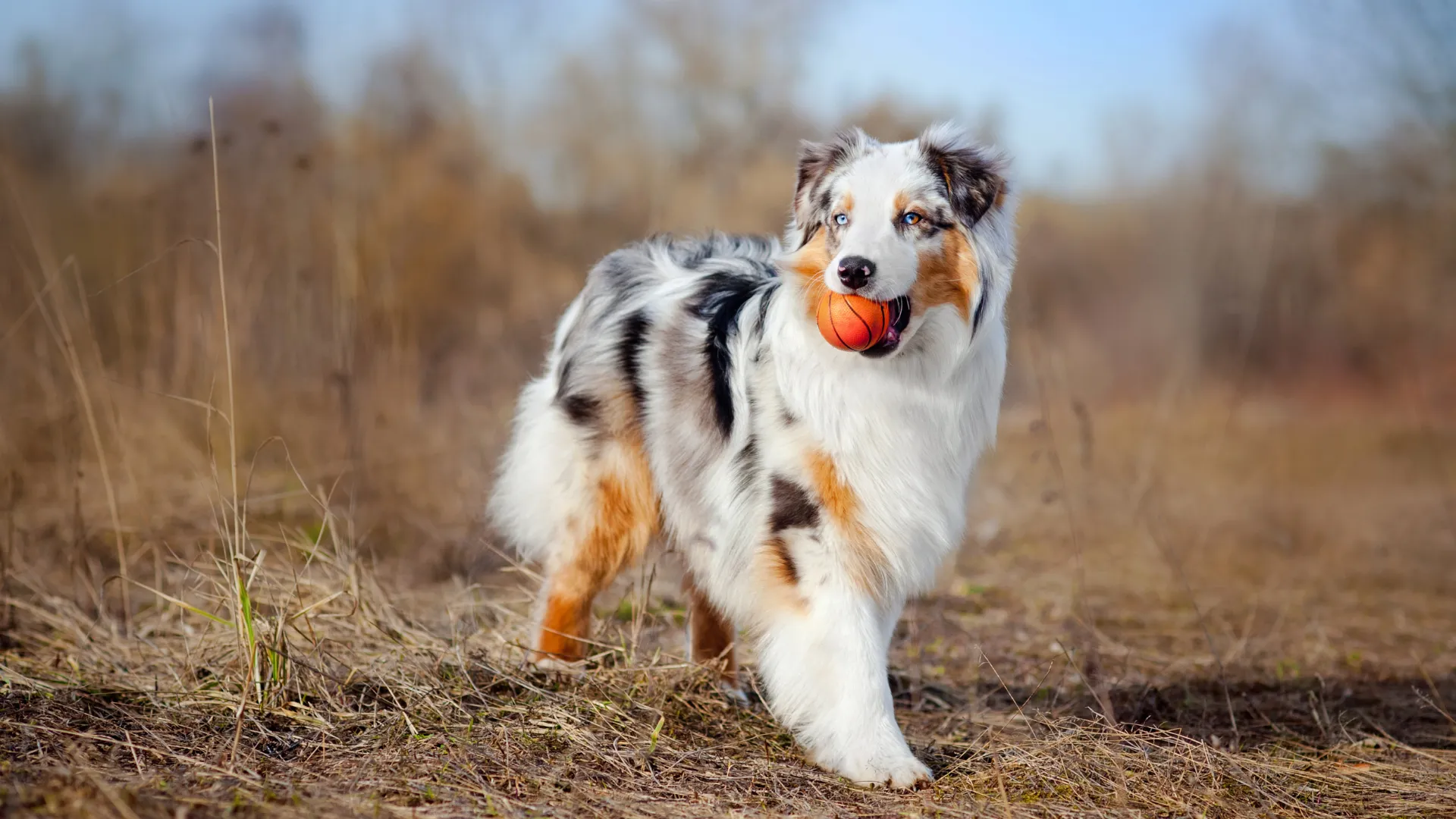
The Two Layers Explained
Guard Hairs (Top Layer): These are the longer, stiffer hairs you see on the outside. Guard hairs are water-resistant and protect your dog from:
- Rain and wet conditions
- Direct sunlight and UV rays
- Dirt and debris
- Minor scratches from brush and branches
- Insect bites
Undercoat (Bottom Layer): This is the soft, fluffy fur close to the skin. The undercoat is made of fine, dense hairs that:
- Trap air to create insulation
- Keep your dog warm in winter
- Keep your dog cool in summer (yes, really!)
- Regulate body temperature automatically
The undercoat works like a thermos. In cold weather, it traps warm air close to the skin. In hot weather, it traps cool air and prevents hot air from reaching the skin. This is why you should never shave an Australian Shepherd.
How the Double Coat Regulates Temperature
Many people think that all that fur makes Australian Shepherds hot in summer. This is not true. The double coat actually keeps them cooler than if they had no coat or a shaved coat.
Here is how it works:
- Guard hairs reflect sunlight away from the skin
- Air gets trapped in the undercoat
- This trapped air creates a barrier between hot outside air and your dog’s skin
- Your dog stays cooler than they would with exposed skin
Australian Shepherds can breathe easily through their normal-length noses, unlike brachycephalic breeds (flat-faced dogs like Bulldogs and Pugs). This means they cool themselves efficiently through panting without needing a shaved coat.
The Shedding Cycle: What to Expect
All Australian Shepherds shed. How much they shed depends on the time of year and your individual dog.
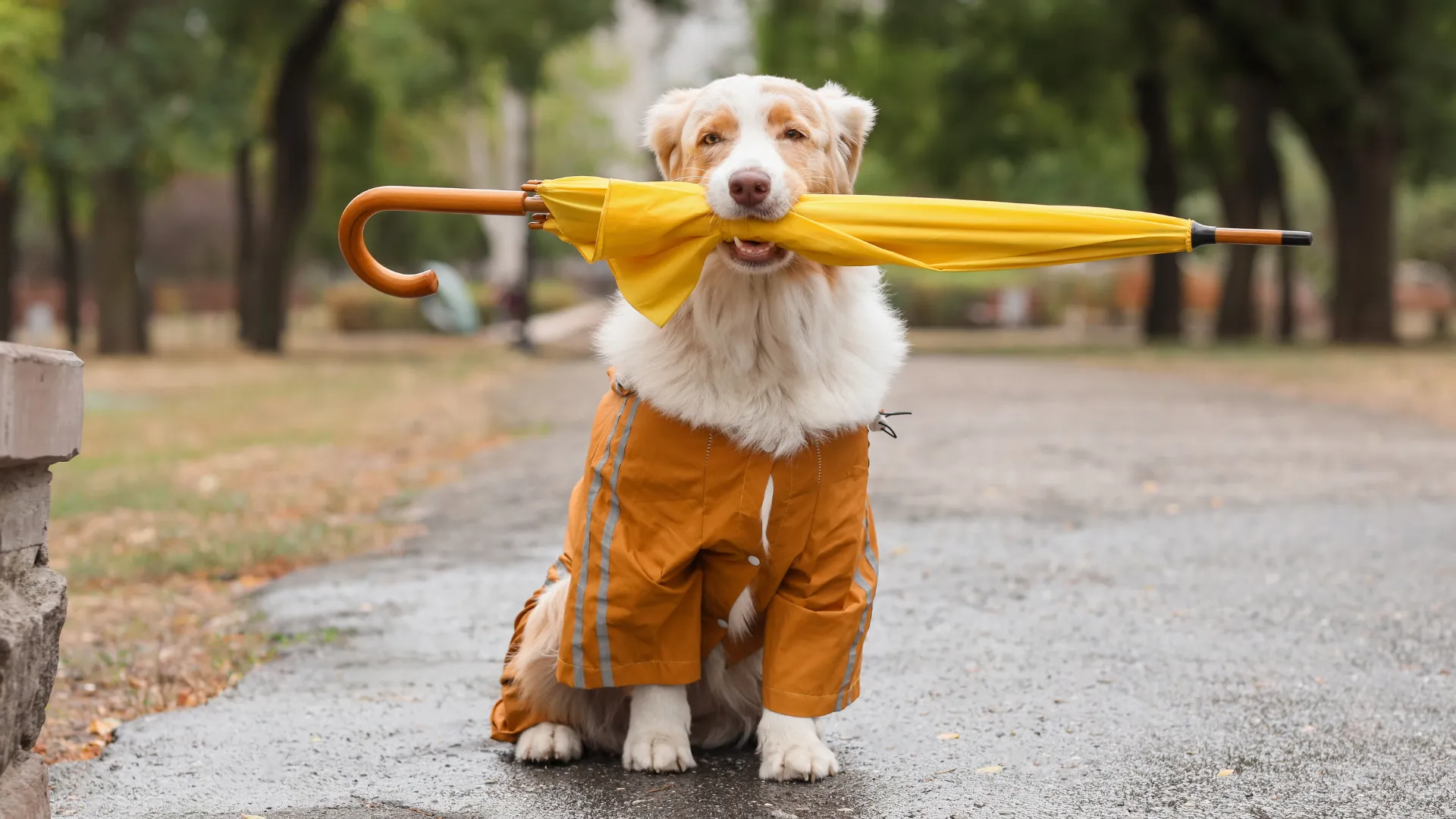
The Big Shed: Coat Blowouts
Twice a year, Australian Shepherds experience heavy shedding called a coat blowout. This happens in:
- Spring (March to May): They shed their heavy winter undercoat to prepare for warmer weather
- Fall (September to November): They shed their lighter summer undercoat to grow a thicker winter coat
During a blowout, the undercoat comes out in large clumps. You might see tufts of fur sticking out all over your dog’s body. This is completely normal. The blowout lasts 2 to 4 weeks.
During this time, you can literally pull out handfuls of soft undercoat. Many owners say they could stuff a pillow with all the fur that comes out.
Year-Round Shedding
Between blowouts, Australian Shepherds still shed moderately. This is normal hair growth and loss that happens all the time. You will find fur on your furniture, clothes, and floors year-round.
Some factors that affect year-round shedding:
- Indoor vs. outdoor dogs: Dogs who live mostly indoors may shed more evenly year-round because temperature stays constant
- Diet quality: Poor nutrition can increase shedding
- Stress: Stressed dogs shed more
- Health issues: Allergies, parasites, or skin conditions increase shedding
Why Australian Shepherds Develop Odor
All dogs have some natural smell, but Australian Shepherds can get quite smelly if not properly groomed. Understanding why they smell helps you prevent it.
Natural Oil Production
Your dog’s skin has sebaceous glands all over it. These glands produce natural oils that:
- Keep skin moisturized
- Make the coat water-resistant
- Protect against bacteria and fungus
These oils are healthy and necessary. However, when oils build up without being brushed out, they:
- Trap dirt and debris
- Mix with dead skin cells
- Create that “doggy smell”
Wet Undercoat Problem
The Australian Shepherd’s thick undercoat holds water like a sponge. When your dog gets wet from rain, swimming, or a bath, the undercoat stays damp for hours. This damp fur is where bacteria grow, creating a musty, wet dog smell.
The smell gets worse because:
- The dense undercoat does not dry quickly
- Bacteria multiply in the warm, damp environment
- The smell gets trapped in the coat
Specific Odor Zones
Some areas of your Australian Shepherd smell worse than others:
Feet: Dogs sweat through their paw pads. This sweat mixes with dirt, bacteria, and yeast to create a corn chip or Frito smell. This is normal but needs regular cleaning.
Ears: The floppy ears trap moisture and heat, creating perfect conditions for yeast and bacteria growth. Ear infections cause a very strong, unpleasant smell.
Rear end: The sanitary area can trap feces and urine in the fur, especially in dogs with long fur around the bottom.
Face and beard: Food and water get trapped in the fur around the mouth, causing bacteria growth and smell.
Essential Grooming Tools for Australian Shepherds
Using the right tools makes grooming much easier and more effective. Do not use tools meant for single-coated breeds. You need tools specifically designed for double coats.
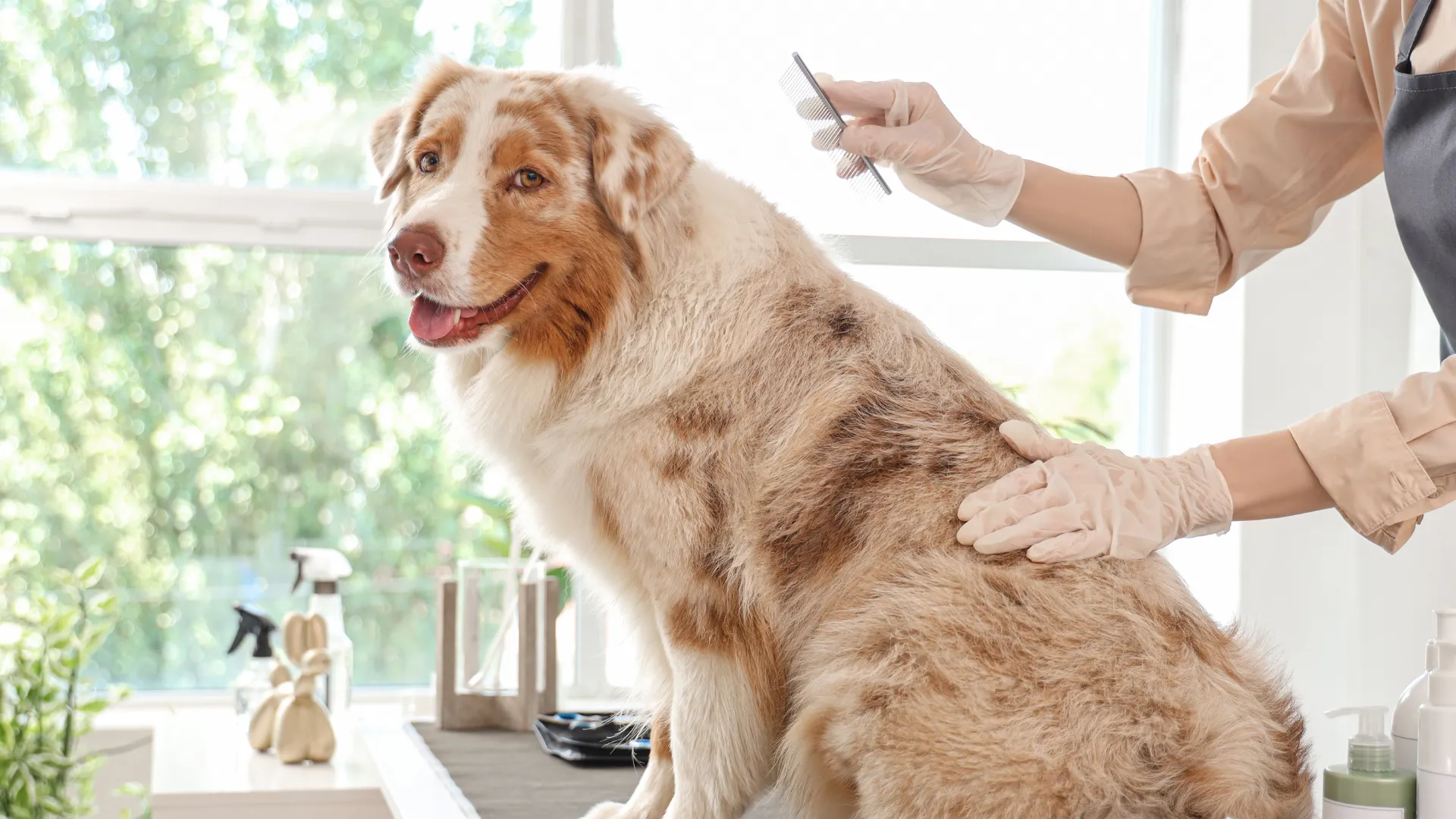
Must-Have Tools
Undercoat Rake: This is your most important tool. An undercoat rake has long, widely-spaced teeth that reach down through the guard hairs to pull out loose undercoat. Look for rakes with:
- Rounded or coated tips (to prevent skin scratching)
- Long teeth (at least 1 inch)
- Rotating teeth (makes brushing easier)
Popular brands: FURminator Undercoat Tool, Pet Neat Grooming Brush, Chris Christensen Big G Slicker
Slicker Brush: This brush has fine, bent wire bristles set close together. A slicker brush:
- Smooths the top coat
- Removes tangles and small mats
- Works well on legs, tail, and behind ears
- Finishes the coat after using the undercoat rake
Choose a slicker with flexible bristles to avoid scratching the skin.
Pin Brush: This looks like a human hairbrush with metal pins instead of plastic bristles. Pin brushes:
- Add shine to the coat
- Distribute natural oils
- Work well for final finishing
- Are gentle for face and sensitive areas
Optional But Helpful Tools
- Metal comb: For checking for remaining mats and tangles
- De-shedding tool: Extra help during blowouts (use carefully, can damage coat if overused)
- Grooming table: Raises your dog to a comfortable working height
- High-velocity dryer: Speeds up drying and blows out loose undercoat
The Complete Brushing Routine
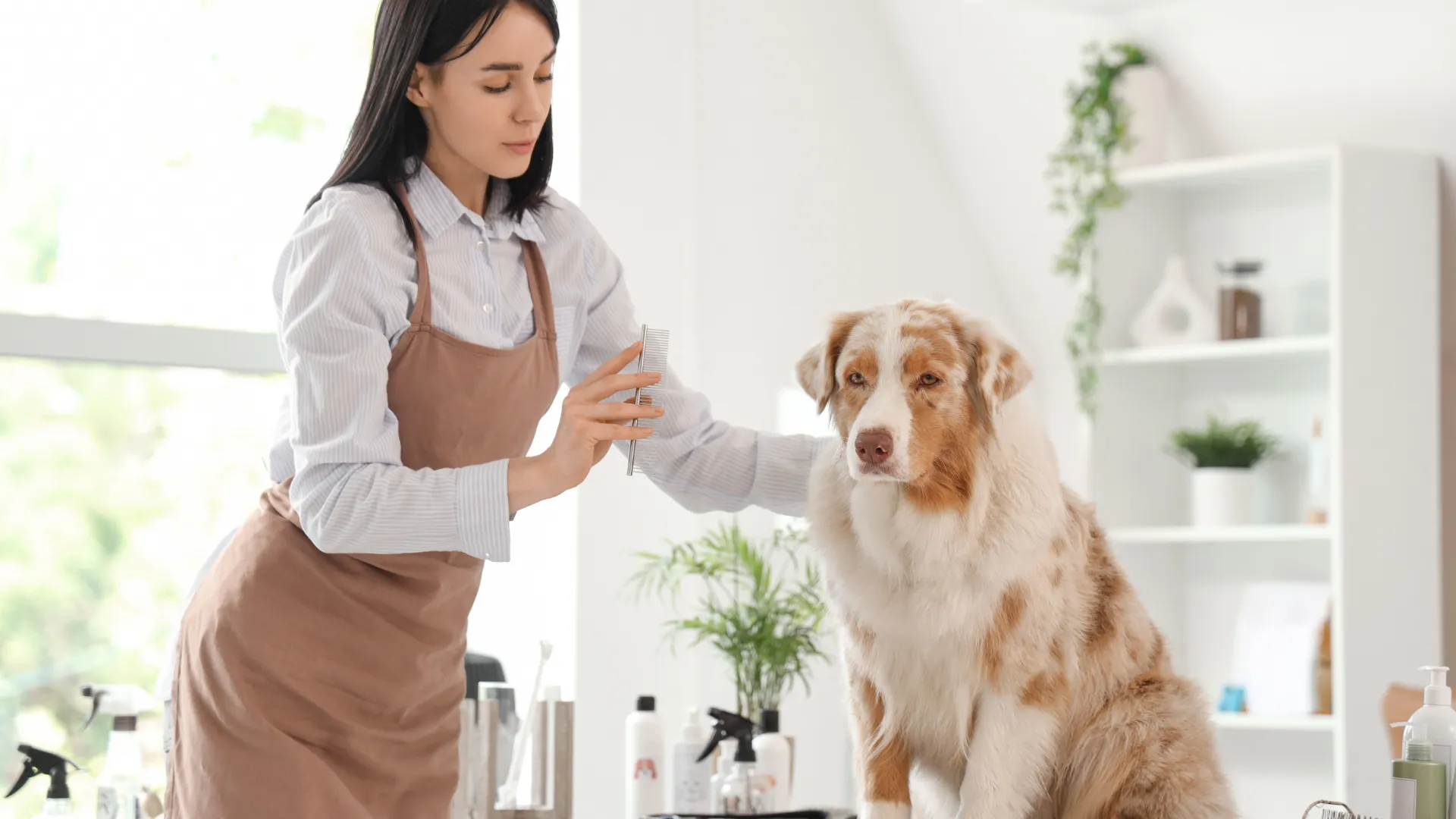
Regular brushing is the single most important thing you can do to control shedding and odor. Here is exactly how to brush your Australian Shepherd properly.
Brushing Frequency
- Normal times: 3 times per week (every other day)
- During coat blowouts: Daily, sometimes twice daily
- After swimming or rain: Once fully dry
- Before bathing: Always brush before a bath to remove loose fur
Step-by-Step Brushing Process
Step 1: Use the Undercoat Rake
- Start at the neck and work backwards
- Stroke in the direction of hair growth (never against the grain)
- Use gentle, firm pressure to reach the undercoat
- Do not press too hard or you will scratch the skin
- Work in sections: neck, shoulders, back, sides, chest, legs
- Pay extra attention to areas where mats form: behind ears, armpits, rear legs
- You should pull out lots of soft, fluffy undercoat
Step 2: Follow with the Slicker Brush
- Use the slicker brush on areas prone to tangles
- Focus on: legs, tail, feathering on the back of the legs, chest fur
- Brush gently to avoid brush burn
- Work out any small mats or tangles
Step 3: Finish with the Pin Brush
- Brush the entire coat with the pin brush
- This distributes natural oils for a shiny coat
- Smooths everything down for a neat appearance
Step 4: Check for Debris
- Run your fingers through the coat
- Check for burrs, stickers, or foxtails (especially after walks)
- Remove any debris you find
- Check between toes for stuck items
Pro Tip: Brush outside or on a grooming table if possible. The amount of fur that comes off during brushing is incredible. Doing it outside saves you from vacuuming the entire house afterward.
Common Brushing Mistakes to Avoid
- Brushing a dirty coat: Always brush before bathing, not after
- Brushing too hard: Causes brush burn and makes your dog hate grooming
- Skipping the undercoat: Only brushing the surface does nothing for shedding
- Brushing wet fur: Wait until the coat is completely dry
- Using the wrong tools: Human brushes or single-coat tools do not work
Bathing Your Australian Shepherd
Bathing removes dirt, excess oils, and odor. However, bathing too often can dry out the coat and skin, making odor worse.
How Often to Bathe
- Normal schedule: Every 6 to 8 weeks
- If smelly or dirty: As needed, but not more than every 4 weeks
- After swimming in a pool: Rinse with fresh water to remove chlorine
- After rolling in something gross: Immediate bath needed
Australian Shepherds do not need frequent baths like some breeds. Bathing too often strips the natural oils that protect the skin and coat.
Choosing the Right Shampoo
Never use human shampoo on your dog. Human products have the wrong pH level and will dry out your dog’s skin.
Best shampoo types for Australian Shepherds:
- Oatmeal shampoo: Soothes sensitive skin, moisturizes, reduces odor
- Hypoallergenic shampoo: For dogs with allergies or sensitive skin
- De-shedding shampoo: Helps loosen undercoat during blowouts
- Deodorizing shampoo: For extra smelly dogs
Always choose dog-specific products with natural ingredients. Avoid shampoos with harsh chemicals, artificial fragrances, or dyes.
The Bathing Process
- Brush thoroughly first: Remove all loose fur and mats before getting your dog wet
- Use lukewarm water: Not hot, not cold
- Wet completely: Make sure water reaches the skin, not just the surface
- Apply shampoo: Work it down to skin level, not just on top of the coat
- Massage well: Spend extra time on smelly areas (feet, ears, rear)
- Rinse completely: This is the most important step. Leftover shampoo causes skin irritation and odor
- Rinse again: When you think you are done rinsing, rinse one more time
- Squeeze out excess water: Gently squeeze water from legs, tail, and body
Drying Your Australian Shepherd
Proper drying is essential for preventing that wet dog smell.
Towel Drying:
- Use absorbent towels to blot (do not rub) the coat
- You will need 3 to 4 towels for a full-sized Aussie
- Pay special attention to the undercoat, which holds the most water
Air Drying:
- Allow your dog to air dry in a warm room
- This can take 4 to 6 hours for the undercoat to fully dry
- Brush once dry to prevent mats from forming
High-Velocity Dryer:
- A dog-specific dryer blows out loose undercoat while drying
- Reduces drying time to 30 to 60 minutes
- Use low heat to avoid burning the skin
- Move the dryer constantly, never hold it in one spot
Important: Never let your Australian Shepherd stay wet for long periods. Damp undercoat is a breeding ground for bacteria and yeast, which causes infections and severe odor. Make sure the undercoat is completely dry, not just the surface fur.
Quick Odor Control Methods
Between baths, you can control odor with these targeted approaches:
| Odor Source | Control Method | How Often |
|---|---|---|
| Coat Oils Building Up | Regular brushing removes excess oils and distributes them evenly | 3 times per week |
| Wet Fur Smell | Spray with diluted apple cider vinegar solution (1 part vinegar to 3 parts water), then dry thoroughly | After rain or swimming |
| Dirty Ears | Use vet-approved ear cleaner on cotton ball or pad (never cotton swabs) | Weekly |
| Smelly Feet | Wipe paws with pet-safe wipes after walks | Daily |
| Skin Imbalance | Add omega-3 fish oil supplement to food for healthy skin and coat | Daily with meals |
| Dirty Rear Area | Sanitary trim and wipe with unscented baby wipes | As needed |
DIY Dry Shampoo for Quick Freshening
When your dog needs freshening but it is not bath day, try this:
- Sprinkle baking soda lightly on the coat
- Massage it into the fur
- Wait 5 minutes
- Brush out thoroughly
The baking soda absorbs oils and odors. Make sure to brush it all out completely.
Why You Should Never Shave an Australian Shepherd
This is one of the most important grooming rules: never shave your Australian Shepherd’s coat. Many owners think shaving will help their dog stay cool in summer or reduce shedding. Both ideas are wrong.
What Happens When You Shave a Double Coat
Loss of Temperature Regulation:
- Guard hairs normally reflect sunlight and UV rays
- The undercoat normally traps cool air against the skin
- Without this system, your dog actually gets hotter, not cooler
- Risk of heatstroke increases because they cannot regulate temperature properly
Sunburn Risk:
- Exposed skin can burn from direct sunlight
- Dog skin is sensitive and not meant to be uncovered
- Sunburn is painful and increases skin cancer risk
Permanent Coat Damage:
- Guard hairs and undercoat grow at different rates
- When shaved, they often do not grow back correctly
- The coat may come back patchy, thin, or with a weird texture
- Some dogs’ coats never fully recover and stay thin permanently
- This condition is called post-clipping alopecia
Increased Shedding:
- Shaving does not reduce shedding
- You will still have hair everywhere, just shorter pieces
- Short hair is actually harder to clean up than long hair
The Only Acceptable Trimming
While you should never shave the body, some trimming is okay and helpful:
- Sanitary trim: Trim fur around the rear end for cleanliness
- Paw pad trim: Trim fur between paw pads to prevent slipping and dirt buildup
- Foot trim: Neaten the fur around the feet
- Ear trim: Trim excess fur inside the ear flap (do not pluck)
These small trims improve hygiene without damaging the coat’s ability to regulate temperature.
Never Shave: If a groomer suggests shaving your Australian Shepherd for summer, find a different groomer. Any professional who understands double coats knows shaving is harmful. Instead, keep up with brushing to remove excess undercoat, which naturally thins for warmer weather.
Additional Hygiene Maintenance
Paw Care
Trim Fur Between Paw Pads: Long fur between the pads collects dirt, ice balls in winter, and makes walking slippery. Trim this fur every 4 to 6 weeks using blunt-tip scissors or clippers.
Nail Trimming: Overgrown nails cause pain and affect how your dog walks. Trim nails every 3 weeks. You should not hear clicking on hard floors when your dog walks.
How to trim nails safely:
- Use dog nail clippers (guillotine or scissor style)
- Trim just the curved tip, avoiding the quick (blood vessel inside)
- If nails are black and you cannot see the quick, trim small amounts at a time
- Have styptic powder ready in case you cut the quick and it bleeds
Ear Care
Australian Shepherds have folded ears that trap moisture and heat. This creates perfect conditions for yeast and bacteria.
Weekly ear cleaning routine:
- Use a vet-approved ear cleaning solution
- Put a few drops into the ear canal
- Massage the base of the ear for 30 seconds
- Let your dog shake their head
- Wipe out visible debris with a cotton ball
- Never push anything deep into the ear canal
Signs of ear infection (see a vet immediately):
- Strong, unpleasant smell
- Head shaking or tilting
- Pawing at ears
- Redness or swelling
- Discharge or excessive wax
Dental Care
While not directly related to coat odor, dental health affects overall dog smell. Bad breath indicates dental disease.
Daily tooth brushing:
- Use dog-specific toothpaste (never human toothpaste)
- Brush teeth daily if possible, minimum 3 times per week
- Focus on the outside surfaces of teeth
- Use a soft dog toothbrush or finger brush
Sanitary Area Maintenance
The fur around your dog’s rear end can trap feces and urine, causing odor and hygiene issues.
Monthly sanitary trim:
- Use clippers or blunt-tip scissors
- Trim the fur around the anus in a small circle
- Trim fur on the back of the thighs if it is very long
- Be extremely careful not to nick the skin
- Consider having a groomer do this if you are uncomfortable
Diet’s Impact on Coat and Odor
What you feed your Australian Shepherd directly affects coat quality, shedding, and smell.
High-Quality Food Matters
Quality dog food should have:
- Real meat as the first ingredient: Not meat by-products or meal
- Omega-3 and Omega-6 fatty acids: Usually from fish oil or flaxseed
- Limited fillers: Avoid foods with corn, wheat, or soy as main ingredients
- Natural preservatives: Vitamin E or vitamin C, not artificial chemicals
Omega Fatty Acids for Healthy Skin
Adding fish oil to your dog’s diet improves:
- Skin health and moisture
- Coat shine and softness
- Reduced dry skin and dandruff
- Less oily skin (properly balanced oils)
- Reduced inflammation from allergies
Dosage: Give 20mg of combined EPA/DHA per pound of body weight daily. For a 50-pound Aussie, this is about 1000mg per day.
Food Allergies and Skin Issues
Some Australian Shepherds have food allergies that cause skin problems and increased odor. Common allergens include:
- Chicken
- Beef
- Dairy products
- Wheat
- Corn
- Soy
If your dog has chronic skin issues, try a limited ingredient diet with a novel protein (like duck, venison, or salmon) to see if symptoms improve.
Hydration
Fresh, clean water is essential for healthy skin. Change water bowls daily and wash them regularly. Dirty water bowls harbor bacteria that can affect overall health and smell.
Warning Signs: When to See a Vet
Some odor and coat problems indicate medical issues that need veterinary attention.
See Your Vet If You Notice:
- Red, inflamed skin: Could indicate allergies, infection, or parasites
- Bald spots or patchy fur loss: May be mange, ringworm, or hormonal issues
- Intense itching and scratching: Allergies, fleas, or skin infection
- Sudden increase in shedding: Stress, hormonal imbalance, or illness
- Strong, unusual odor: Skin infection, ear infection, or dental disease
- Greasy coat: Could indicate thyroid problems
- Dandruff or flaky skin: Dry skin, allergies, or seborrhea
- Hot spots: Red, oozing patches that develop suddenly
Common Health Issues Affecting Coat
Allergies: Environmental or food allergies cause itching, red skin, and excessive shedding. Treatment may include medication, diet changes, or allergy shots.
Fleas: Even one flea can cause severe itching in allergic dogs. Use monthly flea prevention year-round.
Thyroid Problems: Low thyroid (hypothyroidism) causes hair loss, dry skin, and weight gain. Treated with daily medication.
Skin Infections: Bacterial or yeast infections need antibiotics or antifungal medication.
Grooming as Bonding Time
Regular grooming does more than keep your house clean and your dog smelling fresh. It is valuable bonding time that strengthens your relationship.
Benefits Beyond Cleanliness
- Quality time together: 20 to 30 minutes of focused attention on your dog
- Health checks: You notice lumps, bumps, or injuries early
- Stress reduction: Many dogs find brushing relaxing once they get used to it
- Trust building: Handling sensitive areas builds trust
- Routine establishment: Dogs thrive on predictable routines
Making Grooming Positive
If your dog hates grooming, try these tips:
- Start with short sessions (5 minutes) and gradually increase
- Give treats during and after grooming
- Use a calm, happy voice
- Stop if your dog gets too stressed
- End on a positive note with play or a walk
- Never yell or punish during grooming
- Make it part of the daily routine from puppyhood
Complete Grooming Checklist
Every Other Day:
- Brush with undercoat rake (daily during blowouts)
- Wipe paws after walks
Weekly:
- Clean ears with vet-approved solution
- Check for mats, especially behind ears and in armpits
- Inspect skin for hot spots or irritation
Every 3 Weeks:
- Trim nails
Monthly:
- Sanitary trim around rear area
- Trim fur between paw pads
Every 6-8 Weeks:
- Full bath with dog shampoo
- Thorough brushing before and after bath
Professional Grooming vs. DIY
You can handle most Australian Shepherd grooming at home, but professional groomers can help with certain tasks.
When to Use a Professional Groomer
- During heavy coat blowouts if you cannot keep up
- If your dog has severe matting
- For nail trimming if you are uncomfortable doing it
- For sanitary trims if you do not trust yourself with scissors near sensitive areas
- For a thorough de-shedding treatment during seasonal changes
What to Tell Your Groomer
When you take your Australian Shepherd to a professional groomer, be very clear about what you want:
- “I want a bath, brush out, and de-shedding treatment”
- “Trim the sanitary area and paw pads only”
- “Do NOT shave or cut the body coat”
- “Just neaten the feet, do not cut the leg feathering”
A good groomer will understand double-coat care and will never suggest shaving unless there is severe matting that cannot be brushed out.
Seasonal Grooming Adjustments
Spring (Blowout Season)
- Increase brushing to daily
- Consider a professional de-shedding treatment
- Be prepared to vacuum constantly
- Bath after most of the undercoat is out
Summer
- Keep up regular brushing to allow air flow to skin
- Provide shade and fresh water
- Never shave the coat
- Rinse after swimming to remove chlorine or salt
Fall (Second Blowout Season)
- Daily brushing again as winter coat comes in
- Remove dead summer coat to make room for winter undercoat
- Extra attention to keeping coat clean as wet weather begins
Winter
- Watch for ice balls forming between paw pads
- Dry thoroughly after snow play
- Trim paw fur shorter to prevent ice accumulation
- Do not skip brushing just because it is cold
Final Thoughts on Australian Shepherd Grooming
Managing Australian Shepherd shedding and odor requires commitment, but it becomes a simple routine once you establish good habits. The key points to remember:
- Brush every other day with an undercoat rake (daily during blowouts)
- Never shave the double coat
- Bathe every 6 to 8 weeks with dog-specific shampoo
- Dry thoroughly to prevent bacterial growth and odor
- Maintain regular ear, nail, and paw care
- Feed high-quality food with omega fatty acids
- Watch for signs of health problems
With proper grooming, your Australian Shepherd will have a healthy, shiny coat, minimal odor, and you will have less fur covering every surface in your home. The time you invest in grooming pays off in a healthier, better-smelling dog and a cleaner house.
For more information on Australian Shepherd care, including shedding as a breed characteristic, visit our complete breed guide.