
Australian Shepherds are NOT hypoallergenic. They are heavy shedders that produce significant dander and carry allergens in their long double coats. However, allergy sufferers can coexist with the breed by using HEPA air purifiers, frequent bathing, and keeping the dog out of the bedroom.
Contents
- 1 The Hypoallergenic Dog Myth
- 2 Why Australian Shepherds Trigger Allergies
- 3 Common Allergy Symptoms Triggered by Australian Shepherds
- 4 Can You Live with an Australian Shepherd If You Have Allergies?
- 5 Allergy Management Strategies
- 6 Comparing Australian Shepherds to Lower-Allergen Breeds
- 7 Medical Management Options
- 8 What About the Dog’s Allergies?
- 9 Success Stories: Allergy Sufferers Who Own Aussies
- 10 When Australian Shepherds Are Not the Right Choice
- 11 The Bottom Line on Australian Shepherds and Allergies
The Hypoallergenic Dog Myth
Let’s start with the most important fact: there is no such thing as a truly hypoallergenic dog. The term “hypoallergenic” suggests that a breed will not trigger allergies, but this is misleading. All dogs produce allergens to some degree.
Some breeds shed less or produce fewer allergens than others, which makes them better choices for allergy sufferers. Australian Shepherds are not one of these breeds. In fact, they are on the opposite end of the spectrum.
MYTH: Australian Shepherds are hypoallergenic because they are working dogs.
TRUTH: Australian Shepherds have thick double coats that trap dander and shed heavily twice a year. They produce just as much Can f 1 protein (the main allergen) as any other breed.
Why Australian Shepherds Trigger Allergies
The Double Coat Problem
Australian Shepherds have a double coat consisting of guard hairs on top and a dense undercoat underneath. This double coat creates multiple allergy issues:
- Traps dander: Dead skin flakes (dander) get caught in the thick undercoat instead of falling away from the dog
- Holds allergens: The Can f 1 protein clings to both layers of fur
- Releases allergens during shedding: When the coat blows out, massive amounts of allergen-covered fur spread throughout your home
- Increases surface area: More fur means more surface for allergens to attach to
Understanding Can f 1 Protein
Can f 1 protein is the primary dog allergen that triggers reactions in most people. This protein is found in:
- Dog skin cells (dander)
- Pet saliva
- Sebaceous glands (skin oil glands)
- Urine
When your Australian Shepherd licks their fur (which they do constantly), pet saliva containing Can f 1 protein dries on the coat. As the dog moves around, sheds, or you pet them, these dried allergen particles become airborne. You then breathe them in, and your immune system reacts.
Research shows that Can f 1 protein can remain on surfaces for weeks or even months after a dog has been in the area. Regular vacuuming alone does not eliminate it.
The Seasonal Blowout Factor
Twice a year, in spring and fall, Australian Shepherds experience coat blowouts where they shed their entire undercoat. During these periods:
- Shedding increases by 300 to 400 percent
- Dander spreads throughout every room of your home
- Allergen levels in the air spike dramatically
- Even people with mild allergies may experience severe symptoms
Activity Level Increases Allergen Exposure
Australian Shepherds are highly active dogs. They run, jump, play, and move constantly. All this activity:
- Kicks up dust and dander from floors and furniture
- Spreads allergens throughout the house faster
- Increases the amount of airborne particles you breathe
- Makes it harder to contain allergens to one area
Common Allergy Symptoms Triggered by Australian Shepherds
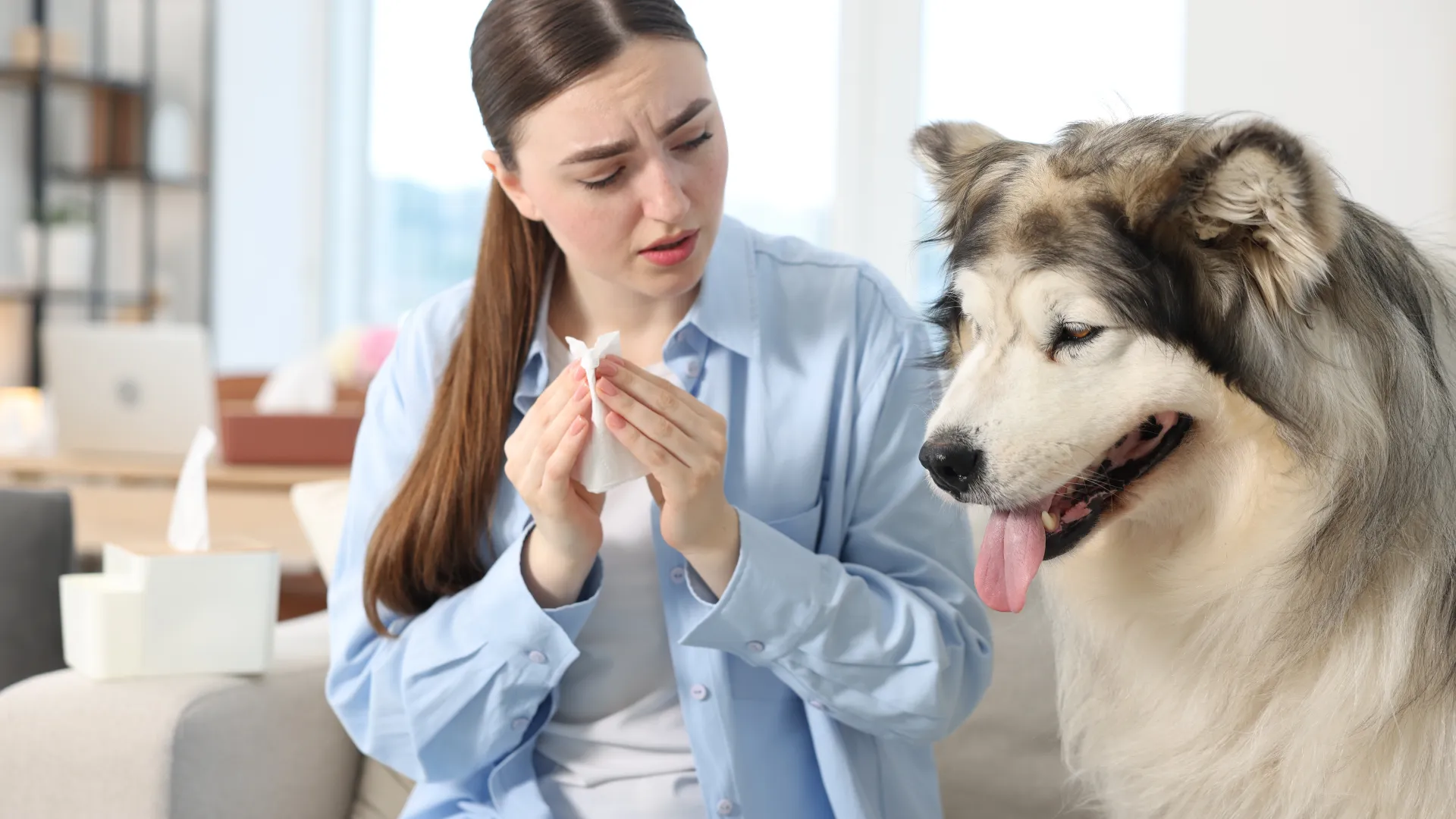
If you are allergic to dogs, exposure to an Australian Shepherd may cause:
Respiratory Symptoms:
- Sneezing and runny nose
- Nasal congestion
- Coughing and wheezing
- Shortness of breath
- Asthma attacks (in people with asthma)
- Chest tightness
Skin and Eye Symptoms:
- Itchy, watery eyes
- Red, inflamed eyes
- Skin rashes or hives
- Itchy skin, especially after petting the dog
- Eczema flare-ups
Severe Reactions:
- Difficulty breathing
- Severe asthma exacerbation
- Anaphylaxis (very rare but possible)
Can You Live with an Australian Shepherd If You Have Allergies?
The answer depends on the severity of your allergies. Many people with mild to moderate allergies successfully own Australian Shepherds by following strict allergy management protocols. However, people with severe allergies or asthma may find it too difficult.
Before Getting an Australian Shepherd
Get Tested: Visit an allergist for proper testing. They can perform:
- Skin prick test: Small amounts of allergen are placed on your skin to check for reaction
- Blood test: Measures specific antibodies to dog allergens in your blood
Testing tells you exactly what you are allergic to. Some people react more to pet saliva than dander. Knowing your specific triggers helps you manage them better.
Spend Time with the Breed: Before committing to an Australian Shepherd, spend extended time with one. Ask a friend or breeder if you can visit their Aussie for several hours, or even better, for a weekend. This real-world test shows you how your body actually reacts.
Consult Your Doctor: Talk to your doctor about whether getting a dog is safe for your specific health situation, especially if you have asthma.
Allergy Management Strategies
If you decide to live with an Australian Shepherd despite allergies, these strategies can significantly reduce symptoms:
High-Priority Actions (Most Effective)
1. Increase Grooming Frequency
Grooming is your most powerful tool for reducing allergens:
- Bathe weekly: Use a gentle dog shampoo to wash away dander, dried saliva, and loose fur. This removes allergens before they spread through your home
- Brush daily outdoors: Never brush your Aussie inside. Take them outside and brush thoroughly to remove loose undercoat and dander before it enters your house
- Wipe down after walks: Use a damp cloth or pet wipes to clean your dog’s paws, belly, and legs after outdoor time. This removes pollen and other allergens they picked up
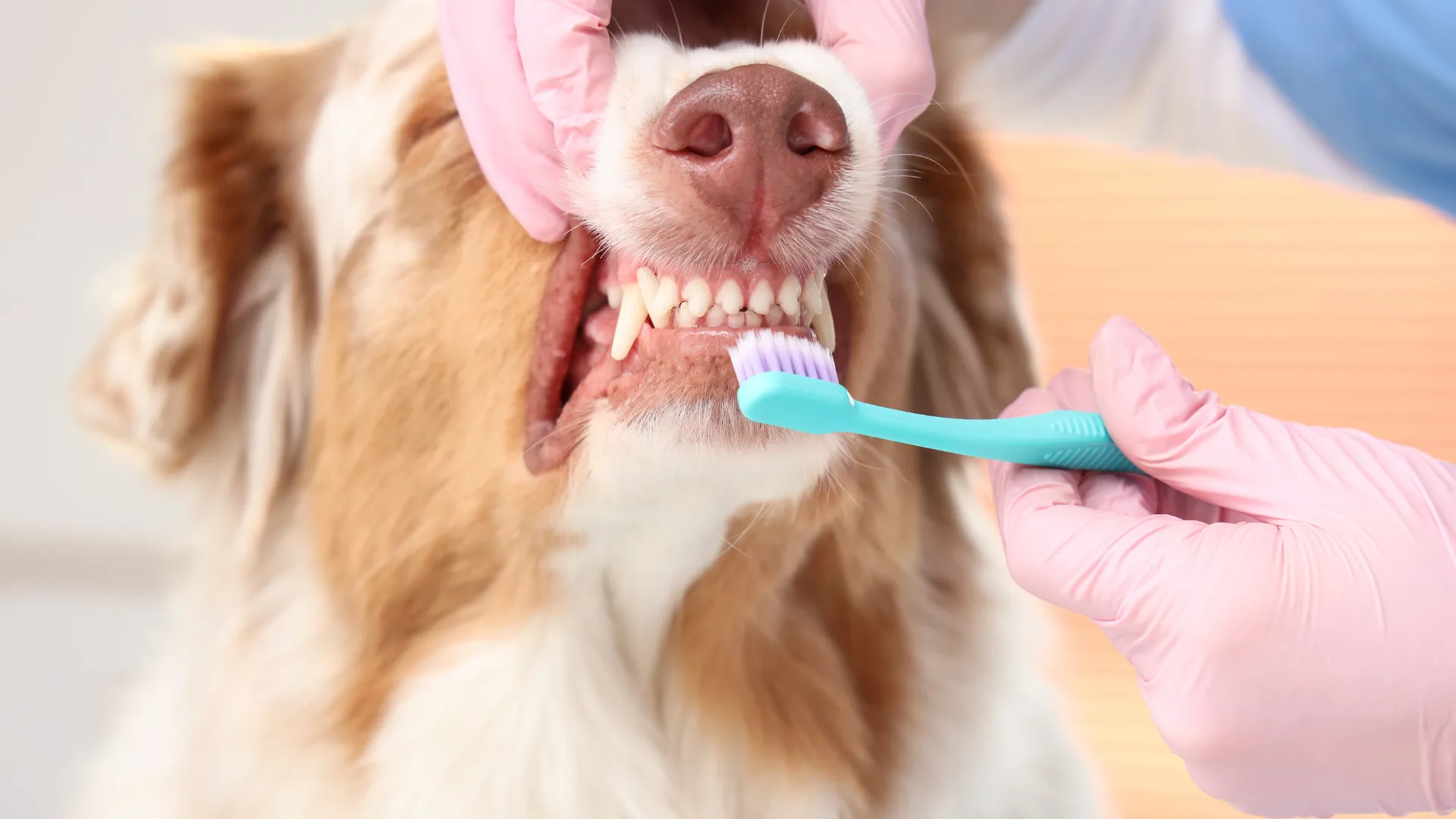
Have a non-allergic family member handle grooming if possible. If you must do it yourself, wear a mask.
2. Install HEPA Filter Air Purifiers
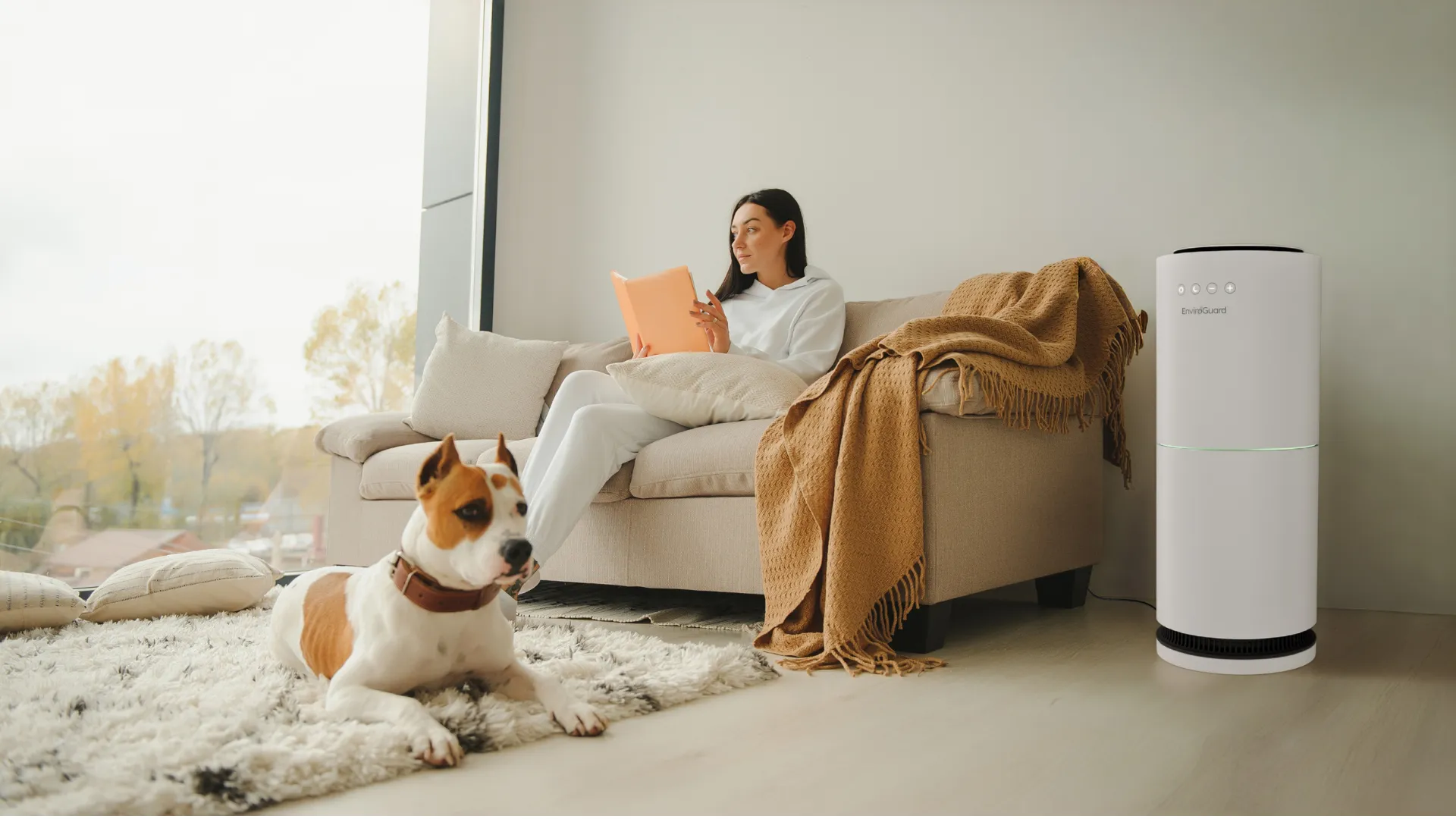
HEPA (High-Efficiency Particulate Air) filters trap 99.97 percent of particles as small as 0.3 microns, including dander and Can f 1 protein.
- Run HEPA purifiers in rooms where you spend the most time, especially your bedroom and living room
- Choose purifiers sized appropriately for your room square footage
- Keep them running 24/7 for maximum effectiveness
- Change filters according to manufacturer recommendations
3. Keep the Dog Out of Your Bedroom
You spend 6 to 8 hours sleeping in your bedroom. Keeping this space dog-free creates an allergen-reduced zone where you can recover.
- Use a baby gate or keep the door closed
- Never let your Aussie on your bed
- Wash bedding weekly in hot water to remove any allergens that made it in
This single change can reduce nighttime symptoms by 50 to 70 percent.

Home Environment Modifications
| Tool or Change | How It Helps | Usage Tips |
|---|---|---|
| HEPA Filter Air Purifier | Traps 99.97% of dander particles and Can f 1 protein from the air | Run continuously in living room and bedroom. Replace filters every 3-6 months |
| Washable Pet Blankets | Blocks fur and dander from penetrating into furniture fabric | Cover furniture where dog sits. Launder weekly in hot water |
| No Bedroom Access | Creates allergen-free sleeping zone, reduces nighttime exposure | Use baby gate at door. Keep closed at all times |
| Hard Floors Instead of Carpet | Allergens do not embed in hard surfaces, easy to vacuum and mop | Use robot vacuum daily. Wet mop weekly with allergen-reducing cleaner |
| Allergen-Proof Covers | Prevent allergens from penetrating mattresses and pillows | Encase all bedroom bedding. Wash covers monthly |
Daily Habits to Reduce Exposure
- Wash hands after petting: Always wash with soap after touching your dog
- Change clothes: If you spent time playing with your Aussie, change clothes before entering your bedroom
- Vacuum frequently: Use a vacuum with a HEPA filter and vacuum at least 3 times per week
- Wash dog bedding: Launder your dog’s bed covers weekly in hot water
- Keep dogs off furniture: Train your Aussie to stay off couches and chairs where you sit
Comparing Australian Shepherds to Lower-Allergen Breeds
If you have allergies but want a dog, understanding breed differences helps you make an informed choice.
Lower-Allergen Breeds:
These breeds shed less and may produce slightly fewer allergens (but are still not hypoallergenic):
- Poodles (Standard, Miniature, Toy)
- Portuguese Water Dogs
- Bichon Frise
- Maltese
- Schnauzers
- Yorkshire Terriers
Important note: These breeds still produce Can f 1 protein in their saliva and skin. They just shed less fur, which means less distribution of the allergen. Some allergic people still react to these breeds.
Australian Shepherd Allergen Load:
Australian Shepherds produce the same amount of Can f 1 protein as any other breed, but their heavy shedding and double coat distribute it much more effectively throughout your home. This makes them a poor choice for people with moderate to severe allergies.
Medical Management Options
If you already have an Australian Shepherd or are determined to get one despite allergies, medical treatments can help manage symptoms:
Over-the-Counter Options
- Antihistamines: Medications like Claritin, Zyrtec, or Allegra block histamine release
- Nasal sprays: Flonase or Nasacort reduce nasal inflammation
- Eye drops: Antihistamine eye drops for itchy, watery eyes
Prescription Treatments
- Stronger antihistamines: Prescription-strength allergy medications
- Immunotherapy (allergy shots): Regular injections that gradually reduce allergic response over time. This takes months to years but can be very effective
- Asthma medications: If you have asthma, proper asthma control is essential
Always consult your doctor before starting any allergy medication regimen.
What About the Dog’s Allergies?
Interestingly, Australian Shepherds themselves can develop allergies. While this is not directly related to whether they are hypoallergenic for humans, it is worth noting.
Australian Shepherds may be allergic to:
- Environmental allergens: Pollen, dust mites, mold
- Food ingredients: Chicken, beef, wheat, corn
- Flea bites: Flea allergy dermatitis
Signs your Aussie has allergies:
- Excessive scratching or licking
- Red, inflamed skin
- Ear infections
- Hair loss
- Hot spots
If your Australian Shepherd has allergies, it may increase shedding and skin flaking, which can worsen your allergy symptoms. Work with your vet to manage your dog’s allergies, which will also help reduce allergens in your home.
Success Stories: Allergy Sufferers Who Own Aussies
Many people with mild to moderate allergies successfully own Australian Shepherds by following strict management protocols. Here is what makes it work:
Realistic Expectations: They understand their symptoms will not disappear completely. With proper management, symptoms typically reduce by 50 to 70 percent, which is tolerable for many people.
Consistent Routine: Success requires daily effort. Weekly baths, daily outdoor brushing, running HEPA filters, and keeping the dog out of bedrooms must become non-negotiable habits.
Medical Support: Most successful allergy sufferers use daily antihistamines or nasal sprays and work closely with their allergist.
Family Help: Having a non-allergic family member handle grooming and veterinary visits makes a big difference.
Home Modifications: Removing carpeting, adding air purifiers, and using washable furniture covers creates a more allergy-friendly environment.
When Australian Shepherds Are Not the Right Choice
Be honest about whether you can successfully manage allergies with this breed. Australian Shepherds are not appropriate if you:
- Have severe dog allergies
- Have poorly controlled asthma
- Cannot commit to weekly bathing and daily outdoor brushing
- Cannot afford HEPA air purifiers and frequent grooming supplies
- Live in a small apartment where containing allergens is nearly impossible
- Have young children with allergies
In these cases, consider truly lower-shedding breeds or a different type of pet altogether.
The Bottom Line on Australian Shepherds and Allergies
Australian Shepherds are definitively not hypoallergenic. Their heavy shedding, thick double coat, and high Can f 1 protein production make them one of the more challenging breeds for allergy sufferers.
However, if you have mild allergies and are willing to invest significant time and money in allergy management, it is possible to live comfortably with an Australian Shepherd. The key is being realistic about the work required and having a solid plan in place before bringing the dog home.

Always consult with an allergist before getting an Australian Shepherd if you have allergies. Spend extended time with the breed to test your reaction. And be prepared to implement strict grooming schedules, environmental controls, and possibly medical treatment to manage symptoms.
For more information on Australian Shepherd care, including grooming needs and breed characteristics, visit our complete guide.
Disclaimer: The information on DogYearsGuide.com is for educational purposes only and does not replace professional veterinary or medical advice. Always consult your doctor or allergist regarding allergy management and treatment.