
Jobs for Australian Shepherds are essential to prevent anxiety and boredom-based chewing. Effective jobs include toy retrieval by name, scent work, hide-and-seek, and interactive puzzle feeders. These tasks satisfy their high working-drive by providing the mental drain that a simple walk cannot offer.
Contents
- 1 Why Australian Shepherds Need Jobs
- 2 The 10 Best Jobs for Australian Shepherds
- 3 Creating a Daily Job Schedule
- 4 Signs Your Job Program Is Working
- 5 Troubleshooting Common Issues
- 6 Age-Appropriate Job Modifications
- 7 Combining Jobs with Physical Exercise
- 8 The Bottom Line on Jobs for Australian Shepherds
Why Australian Shepherds Need Jobs
The saying “an unemployed Aussie is a destructive Aussie” exists for good reason. Australian Shepherds were bred for hundreds of years to work alongside farmers, herding sheep and cattle from sunrise to sunset. This working heritage is built into their DNA.
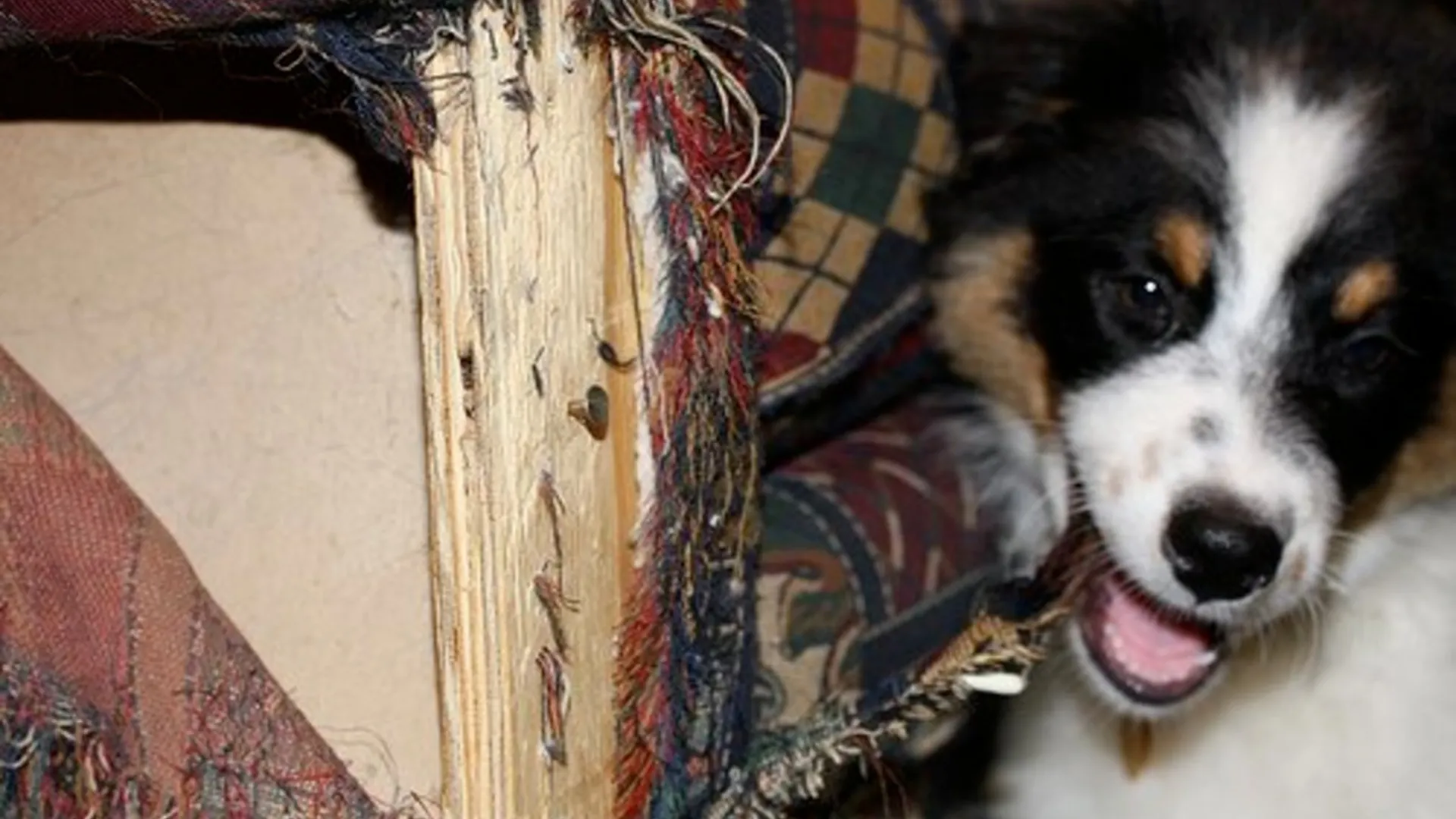
Even though your Australian Shepherd lives in a house instead of on a ranch, they still have that intense need to work. Without a job to do, all that intelligence and energy has nowhere to go. The result? Destructive behavior that frustrates owners and makes dogs miserable.
What Happens Without Mental Stimulation
When Australian Shepherds do not get enough cognitive stimulation and enrichment, they create their own jobs. Unfortunately, these self-assigned jobs usually involve:
- Destructive chewing: Furniture, shoes, walls, door frames, anything they can sink their teeth into
- Excessive barking: At nothing, at everything, constantly
- Digging: Holes in the yard, scratching at doors and floors
- Herding family members: Nipping at heels, circling people, blocking doorways
- Obsessive behaviors: Tail chasing, shadow chasing, pacing
- Escape attempts: Jumping fences, digging under gates
- Anxiety and stress: Panting, whining, inability to settle
These behaviors are not your dog being bad. They are your dog trying to cope with having no outlet for their natural work-drive and intelligence.
Why Physical Exercise Alone Is Not Enough
Many owners think that if they just walk or run their Australian Shepherd enough, the dog will be tired and well-behaved. This is partially true but misses a critical piece.
Australian Shepherds need both physical AND mental exercise. You can walk your Aussie for two hours, and they might be physically tired, but their brain is still wide awake and looking for something to do. A mentally unstimulated Aussie is like a bored genius with too much time on their hands.
Mental work actually tires dogs out faster and more completely than physical work alone. Fifteen minutes of intense mental activity (like scent work or puzzle solving) can tire an Aussie as much as a 30-minute walk.
The Benefits of Giving Your Aussie Jobs
When you provide appropriate jobs and mental enrichment, you will see:
- Dramatic reduction in destructive chewing
- Calmer behavior overall
- Better ability to settle and relax
- Decreased anxiety and stress
- Stronger bond between you and your dog
- A happier, more fulfilled dog
- Less frustration for everyone in the household
The best part? Most jobs for Australian Shepherds can be done right at home, even in bad weather, and take as little as 10 to 15 minutes at a time.
The 10 Best Jobs for Australian Shepherds
Here are proven jobs that satisfy your Aussie’s need to work while preventing destructive behavior. Mix and match these throughout the day for best results.
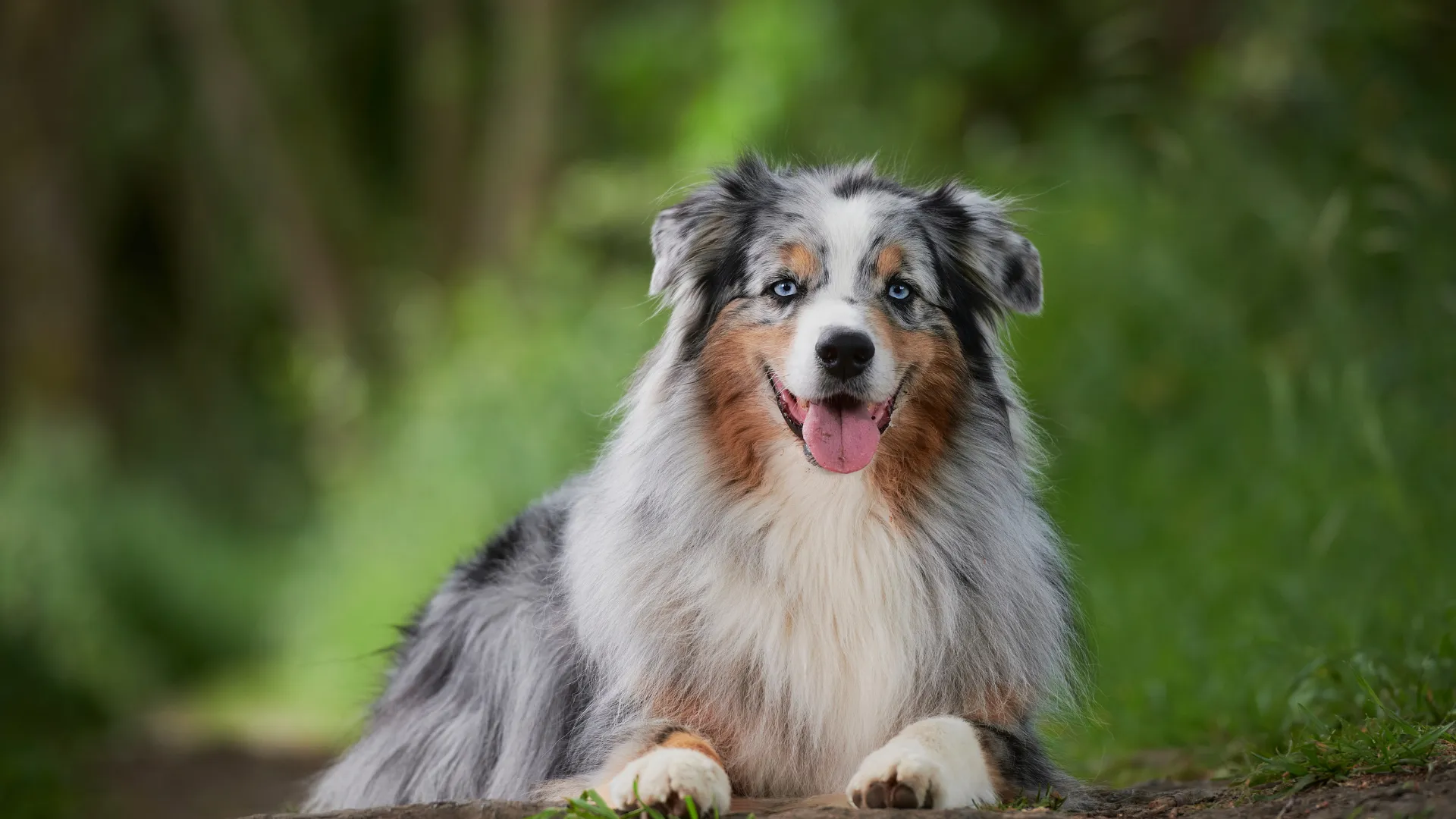
1- Toy Retrieval by Name
What It Is: Teaching your Australian Shepherd to fetch specific toys when you name them.
Why It Works: This job uses memory, listening skills, and problem-solving. Your dog has to remember which toy is which, listen carefully to your command, search for the correct toy, and bring it back. It is cognitive stimulation at its best.
How to Train It:
- Start with two very different toys: Choose toys that look and feel different, like a ball and a rope
- Name one toy: Hold the ball, say “ball” clearly, then toss it a short distance
- Reward the grab: When your dog picks up the ball, say “yes!” and give a treat
- Repeat many times: Do this 10 to 15 times per session, always saying “ball”
- Add the second toy: After several days, introduce the rope with the same process
- Test their knowledge: Place both toys on the floor, ask for “ball,” and reward only if they bring the ball
- Add more toys: Once they know two toys, add a third, then a fourth
Time Commitment: 10 to 15 minutes per session, once or twice daily
Advanced Version: Teach your dog to bring you specific toys in a sequence. “Bring me the ball, then the rope, then the squeaky.” This creates a mini memory challenge.
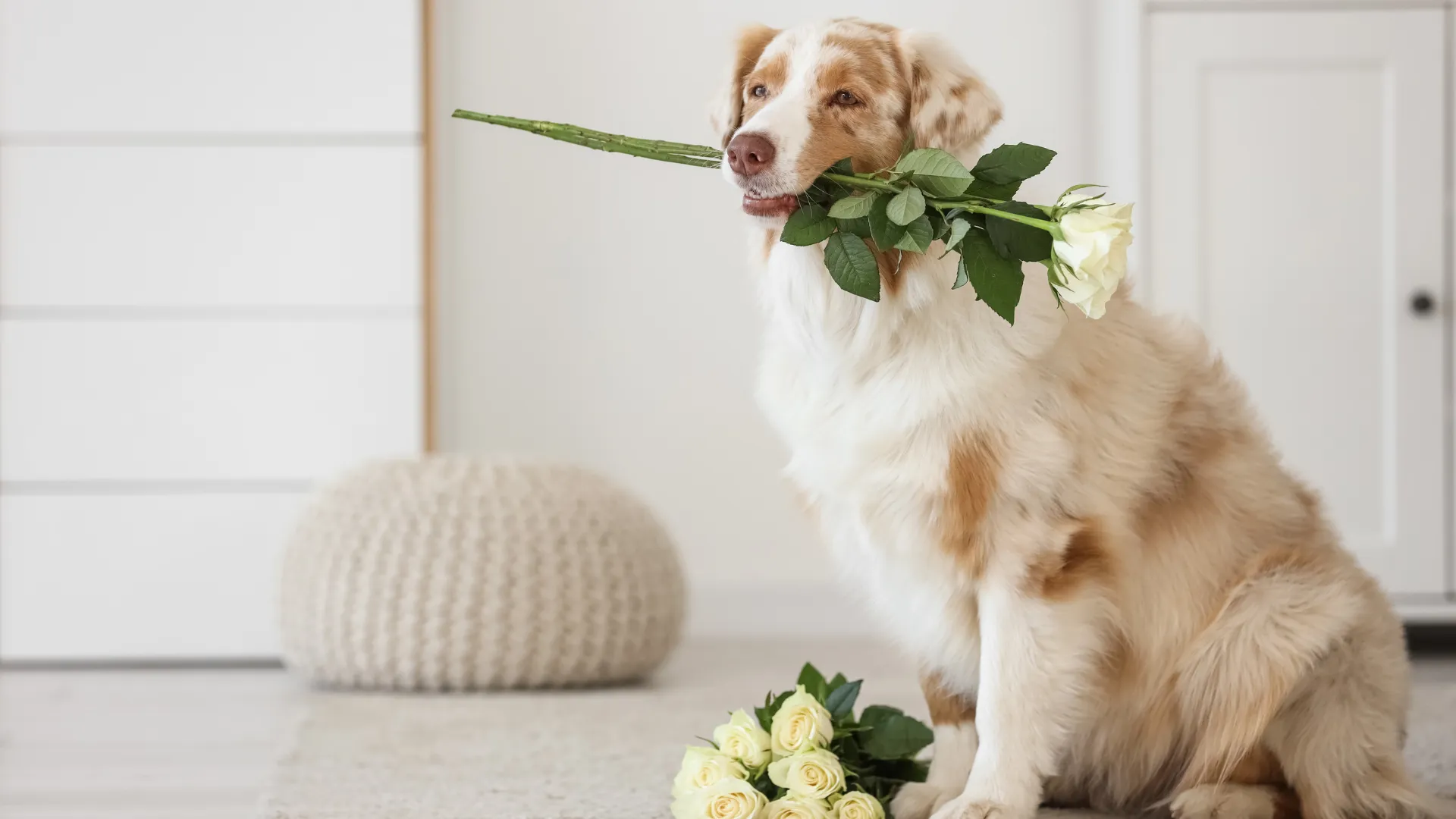
2- Scent Work Games
What It Is: Hiding treats or toys around your home or yard for your dog to find using their nose.
Why It Works: Dogs have an incredible sense of smell, and using it is deeply satisfying and mentally draining. Scent work taps into natural hunting and tracking instincts while providing serious cognitive stimulation.
How to Do It:
- Start easy: While your dog watches, place a treat under a cushion or behind a chair
- Give the cue: Say “find it!” with excitement
- Let them search: Allow your dog to sniff around and discover the treat
- Celebrate success: Praise enthusiastically when they find it
- Make it harder: Hide treats in harder spots – inside closed boxes, under rugs, in different rooms
- Hide multiple treats: Place 5 to 10 treats around the house for a longer search
Time Commitment: 10 to 20 minutes per session
Advanced Version: Hide a specific scented object (like a tennis ball with a particular smell) and teach your dog to find that scent among other items. This is how professional detection dogs are trained.
3- Hide-and-Seek
What It Is: A game where you hide and your dog has to find you.
Why It Works: This job combines scent tracking, problem-solving, and recall training. It also builds your bond because finding you is the ultimate reward.

How to Play:
- Have someone hold your dog: Or tell them to stay if they know the command
- Go hide: Start with easy spots like behind a door or in another room
- Call your dog: Say “come find me!” or just their name
- Reward when found: Lots of praise, treats, or play when they locate you
- Make it harder: Hide in closets, upstairs, in the bathtub, anywhere they have to really search
- Switch roles: Hide your dog’s favorite toy and let them search for it
Time Commitment: 15 to 20 minutes
Perfect For: Rainy days when you cannot go outside. This game drains energy indoors and is fun for the whole family.
4- Interactive Puzzle Toys and Feeders
What It Is: Toys that make your dog work to get food out, like treat balls, Kongs, or puzzle feeders.
Why It Works: Turning mealtime into a puzzle slows down eating and provides mental enrichment. Your dog has to figure out how to manipulate the toy to release food.
Best Puzzle Toys for Aussies:
- Kong Classic: Stuff with kibble, peanut butter, or wet food and freeze for extra challenge
- Treat balls: Dog rolls the ball around to dispense kibble
- Snuffle mats: Hide kibble in fabric strips for sniffing and searching
- Puzzle boards: Slide pieces, lift flaps, or spin wheels to reveal treats
- Slow feeder bowls: Ridges and mazes make eating take longer
How to Use:
- Start with easy puzzles so your dog does not get frustrated
- Gradually increase difficulty as they get better at solving them
- Rotate different puzzle toys to keep it interesting
- Use part or all of their daily food in puzzles instead of a bowl
Time Commitment: 10 to 30 minutes (they work independently)
Pro Tip: Freeze stuffed Kongs the night before. A frozen Kong can keep an Aussie busy for 30 to 45 minutes.
5- Indoor Agility Course
What It Is: Setting up an obstacle course in your home using household items.
Why It Works: Agility training provides both physical and mental exercise. Your dog has to listen to your directions, make decisions about how to navigate obstacles, and use their body in coordinated ways.
DIY Agility Equipment:
- Tunnels: Cardboard boxes with ends cut out, or a play tunnel
- Jumps: Broomstick balanced on low objects, or stacks of books
- Weave poles: Broomsticks or PVC pipes stuck in buckets
- Platform: Sturdy box or ottoman to jump on and off
- Balance beam: 2×4 board laid on the ground
How to Train:
- Introduce each obstacle one at a time
- Lure your dog through with treats
- Add a command like “tunnel” or “jump”
- Link obstacles together into a course
- Time their runs for an extra challenge
Time Commitment: 15 to 20 minutes
Benefits: This counts as both physical exercise and mental training. Plus, it is a fun activity to do together.
6- Herding Ball Activities
What It Is: A large, heavy ball that your Australian Shepherd pushes around with their nose and body.
Why It Works: Herding balls satisfy the natural herding instinct without requiring actual livestock. Pushing the ball mimics moving sheep, which gives your Aussie’s work-drive an appropriate outlet.
How to Introduce:
- Get a herding ball sized appropriately for your dog (too big to pick up in their mouth)
- Show interest in the ball yourself to spark curiosity
- Reward any interaction – nosing it, pawing it, pushing it
- Let them figure out that pushing makes it move
- Some dogs take to it immediately, others need encouragement
Where to Use:
- Backyard for outdoor play
- Basement or hallway for indoor use
- Large open spaces work best
Time Commitment: 20 to 30 minutes (they often play independently once they understand)
Warning: Supervise play to make sure your dog does not become obsessive. Take breaks and put the ball away when done.
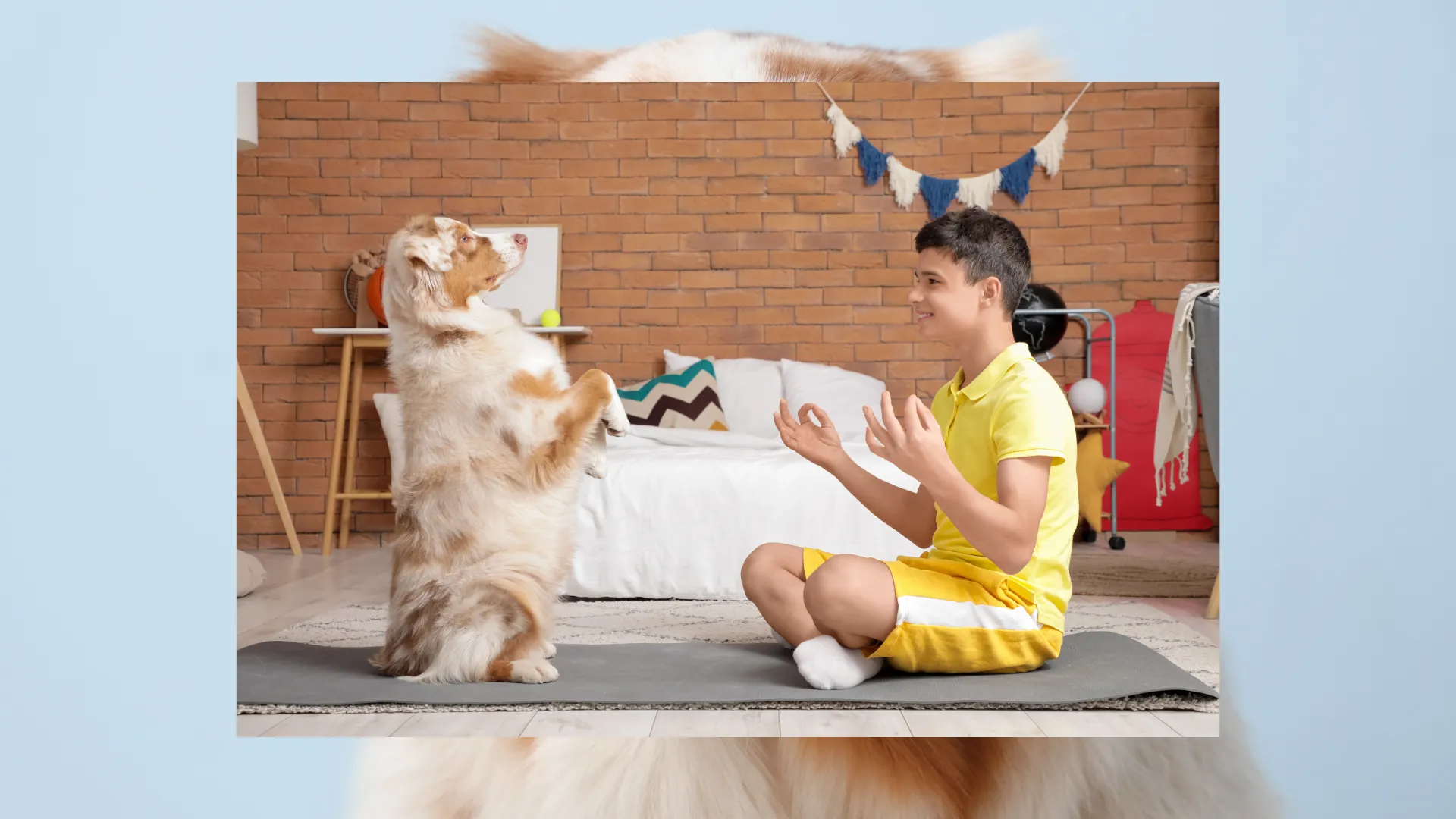
7- Trick Training Chains
What It Is: Teaching your dog to perform multiple tricks in sequence on a single command.
Why It Works: This advanced training requires memory, focus, and understanding of complex commands. It challenges your Aussie’s brain and builds their confidence.
How to Build Trick Chains:
- Teach individual tricks first: Spin, paw, roll over, play dead, bow, etc.
- Link two tricks: Command “spin” then immediately “paw”
- Reward the chain: Only give treats after both tricks are complete
- Add a third trick: Spin, paw, then roll over
- Create a routine: Eventually, one command triggers the whole sequence
- Add hand signals: Combine voice and visual cues
Example Chains:
- “Showtime” = spin + bow + wave
- “Sleepy time” = circle + lie down + play dead
- “Fetch routine” = get ball + bring it + drop it + sit
Time Commitment: 10 to 15 minutes per session
Advanced Challenge: Add toy retrieval by name into trick chains. “Get the ball, bring it here, drop it, spin, sit.”
8- Tug with Rules
What It Is: Playing tug-of-war while teaching impulse control through “take it” and “drop it” commands.
Why It Works: Tug is a natural way to channel your Aussie’s herding nip instinct into appropriate play. Adding rules makes it a training exercise that teaches self-control.
How to Play Properly:
- Teach “take it”: Offer the tug toy and say “take it” when they grab it
- Play tug briefly: 5 to 10 seconds of pulling
- Teach “drop it”: Stop moving the toy, hold a treat to their nose, say “drop it”
- When they release: Give the treat immediately
- Resume play: Say “take it” again and continue
- Practice control: Randomly ask for “drop it” during play
Rules for Safe Tug:
- Always YOU decide when tug starts and ends
- If teeth touch your hand, game stops immediately
- Practice “drop it” every few seconds
- Never pull upward (can hurt their neck), pull side to side only
- Let them “win” sometimes to keep it fun
Time Commitment: 10 to 15 minutes
Benefits: Builds impulse control, provides physical exercise, and gives an outlet for mouthing behavior.
9- Nose Touch Targeting
What It Is: Training your dog to touch their nose to your hand or to objects on command.
Why It Works: Targeting teaches focus and precision. It is a foundational skill for more advanced tricks and provides calm, controlled mental work.
How to Train:
- Hold out your flat palm: A few inches from your dog’s nose
- Wait for curiosity: Most dogs will sniff or touch your hand
- Mark and reward: The instant their nose touches your palm, say “yes!” and give a treat
- Repeat: Do this 10 to 15 times
- Add the command: Start saying “touch” just before presenting your hand
- Move your hand: Different heights, positions, distances
- Transfer to objects: Teach them to touch lids, sticky notes, or targets
Advanced Uses:
- Touch light switches to “turn off lights”
- Touch bells to signal they need to go outside
- Touch specific markers in agility or trick training
- Close doors or cabinets by nosing them shut
Time Commitment: 5 to 10 minutes per session
Perfect For: Calming an overly excited dog. Targeting requires focus and precision, which naturally settles energy.
10- Cleanup Helper
What It Is: Teaching your Australian Shepherd to pick up their toys and put them in a basket or box.
Why It Works: This is a real job with a visible result. Your dog learns a multi-step task, gets to feel useful, and you get help cleaning up.
How to Train:
- Start with “take it”: Get your dog to pick up a toy
- Lure to the basket: Hold a treat over the toy basket
- Wait for the drop: Most dogs will drop the toy to get the treat
- Reward immediately: When the toy falls in the basket
- Repeat many times: Practice until they understand
- Add the command: Say “cleanup” or “tidy up”
- Add more toys: Gradually increase how many toys they pick up before getting a reward
Time Commitment: 10 minutes per session while training, then ongoing as a helpful routine
Real-Life Use: Make cleanup part of the daily routine. Before bed or before meals, your dog helps put toys away. This gives them a sense of purpose and turns a chore into a job.
Creating a Daily Job Schedule
The key to a well-behaved Australian Shepherd is consistency. Spread jobs throughout the day to keep their brain engaged. Here is a sample schedule:
| Time of Day | Job or Activity | Duration | Goal |
|---|---|---|---|
| Morning (7:00 AM) | Scent work + puzzle feeder for breakfast | 20 minutes | Wake up their brain and start the day mentally engaged |
| Mid-Morning (10:00 AM) | Toy retrieval by name or trick training | 10 to 15 minutes | Short training session to break up the day |
| Afternoon (2:00 PM) | Hide-and-seek or herding ball play | 15 to 20 minutes | Midday mental and physical drain |
| Evening (5:00 PM) | Indoor agility course or tug with rules | 20 minutes | Active play before dinner |
| Before Bed (8:00 PM) | Nose targeting or frozen Kong | 15 to 30 minutes | Calm mental activity to tire them before sleep |
Important Notes:
- Mix up which jobs you do each day to keep things interesting
- Rotate weekly so your dog does not get bored with the same routine
- Adjust timing based on your schedule
- Some days will be busier than others, and that is okay
- Even 15 minutes of mental work is better than nothing
Pro Tip: Keep job supplies organized in a dedicated bin or basket. Having everything ready makes it easy to fit jobs into your day, even when you are busy.
Signs Your Job Program Is Working
How do you know if these jobs are actually helping? Watch for these positive changes:
Behavioral Improvements
- Reduced destructive chewing: Less damage to furniture, shoes, and household items
- Calmer overall demeanor: Your dog settles more easily and does not pace constantly
- Better focus: Pays attention when you talk and responds to commands more reliably
- Less barking: Fewer boredom barks and alert barks
- Improved sleep: Your dog actually rests instead of staying on high alert
- Less anxious behaviors: Reduced panting, whining, or pacing
Engagement Signals
- Eager eyes at job time: Your dog gets excited when they see you grab puzzle toys or training treats
- Active participation: They engage fully rather than giving up quickly
- Learning quickly: They pick up new jobs and tricks faster
- Seeking you out: Coming to you with toys, asking for interaction
Physical Relaxation
- Loose, relaxed body language: Not tense or on edge
- Deep sleep: Actually sleeping soundly, not just resting with eyes closed
- Soft eyes and mouth: Relaxed facial expression
- Belly-up sleeping: Sleeping on their back indicates deep relaxation
Watch for Over-Stimulation: While jobs are essential, too much can also be a problem. If your dog seems stressed, cannot settle even after jobs, or becomes obsessive about activities, you may be overdoing it. Rest and downtime matter too. Balance is key.
Troubleshooting Common Issues
Problem: My Dog Loses Interest Quickly
Solutions:
- Make it easier – you might be starting too hard
- Use higher value treats (chicken, cheese instead of kibble)
- Keep sessions shorter (5 minutes instead of 15)
- End on success, not frustration
- Try a different job that better matches their interests
Problem: My Dog Gets Too Excited and Cannot Focus
Solutions:
- Do physical exercise first to take the edge off
- Start with calmer jobs like nose targeting
- Work in a quiet, low-distraction environment
- Use a calm voice and slow movements
- Reward calm behavior specifically
Problem: I Do Not Have Time for All These Jobs
Solutions:
- Focus on 2 to 3 jobs per day, not all 10
- Use puzzle feeders for meals (no extra time needed)
- Combine jobs with activities you are already doing
- Get family members involved
- Remember: 10 minutes of mental work is better than nothing
Problem: My Dog Still Chews Destructively
Check These Factors:
- Are they getting enough physical exercise too? (Mental work alone is not enough)
- Could this be separation anxiety rather than boredom?
- Are they teething? (Puppies need appropriate chew toys)
- Have you ruled out medical issues causing stress?
- Are you providing appropriate chew outlets?
Age-Appropriate Job Modifications
For Puppies (8 Weeks to 6 Months)
- Keep sessions very short (5 minutes)
- Focus on simple jobs like toy retrieval with 2 toys
- Use easy puzzle toys
- Lots of praise and high-value treats
- Indoor agility with very low jumps only
- Short scent work games
For Adolescents (6 Months to 2 Years)
- Increase difficulty and duration
- Add more complex trick chains
- Introduce herding balls
- Longer scent work challenges
- Full agility courses
- Expect some regression during adolescence – stay consistent
For Adults (2 to 7 Years)
- Full range of jobs available
- Can handle long, complex challenges
- Continue learning new jobs to prevent boredom
- May need more jobs than younger dogs to stay satisfied
For Seniors (7+ Years)
- Focus more on mental work, less on physical
- Shorter sessions with more rest breaks
- Scent work and puzzle feeders are excellent
- Gentle nose targeting and trick training
- Avoid high-impact agility
- They still need jobs, just adapted to their abilities
Combining Jobs with Physical Exercise
Remember that jobs provide mental stimulation, but Australian Shepherds still need physical exercise. The ideal daily routine includes both:
Morning:
- 30 to 60 minute walk or run (physical)
- 15 to 20 minute job session (mental)
Afternoon:
- 10 to 15 minute job or training (mental)
Evening:
- 20 to 30 minute active play or walk (physical)
- 15 to 20 minute job session (mental)
This combination of physical and mental exercise creates a tired, satisfied, well-behaved Australian Shepherd.
Quick Start Checklist
To get started with jobs today:
- Pick 2 to 3 jobs from the list that sound most interesting
- Gather supplies (toys, treats, puzzle feeders)
- Start with 5 to 10 minute sessions
- Schedule specific times each day
- Track what works and what does not
- Add new jobs gradually
- Be consistent for at least 2 weeks before judging results
- Adjust based on your dog’s response
The Bottom Line on Jobs for Australian Shepherds
Australian Shepherds were bred to work. This is not something you can train out of them or ignore. When you give your Aussie appropriate jobs, you are not just preventing destructive behavior. You are fulfilling a deep, genetic need that makes them who they are.
The phrase “an unemployed Aussie is a destructive Aussie” is absolutely true. But the flip side is equally true: an Aussie with jobs is a happy, well-adjusted companion.
Start small. Pick one or two jobs from this list and try them this week. You will likely see improvement in behavior within days. Over time, build up a rotation of jobs that keep your dog mentally stimulated and satisfied.
Your furniture will thank you. Your neighbors will thank you. And most importantly, your Australian Shepherd will be happier and more fulfilled.
For more information on Australian Shepherd care, including their working dog nature and exercise needs, visit our complete breed guide.